2026 Q4 Market Outlook

It is hard to believe how quickly 2026 has gone and, from an investment perspective, how strong the year has been so far.
One of the defining characteristics of this year’s market has been just how quietly that strength has developed. While 2026 hasn’t been dominated by the kind of market headlines we’ve seen in other years, investors have nonetheless experienced meaningful growth across a number of asset classes, contributing to strong results in portfolios and creating opportunities within financial plans.
That makes this a useful point in the year to step back and compare what we expected coming into 2026 with what has actually unfolded. As we look toward year-end and begin thinking about 2027, we’ll consider where markets stand today, the risks and opportunities we’re watching, and how we’re positioning portfolios for the months ahead.
What We Expected and What Actually Happened
Coming into 2026, our outlook called for a reasonably positive year for stocks, but we expected returns to be more muted than what we’ve experienced so far.
We also anticipated a more challenging environment for bonds. At the time, there was considerable uncertainty around the path of interest rates, including the possibility that rates could remain elevated, or even move higher. That concern has become increasingly relevant as the year has progressed. At the same time, we saw potential value in commodities, both as an opportunity for returns and as a way to help diversify portfolios and hedge against some of the risks we identified on the horizon.
Fast-forward to the end of the third quarter, and several of those themes have played out in unexpected ways.

Figure 1: Calendar-year total returns by asset class, ranked best to worst
Sources: S&P Dow Jones Indices, FTSE Russell, MSCI, ICE Data Indices, S&P Global (iBoxx), Bloomberg. Index representation: US Large Cap – S&P 500 Index (price return); US Mid Cap – Russell MidCap Index; US Small Cap – Russell 2000 Index; International Developed – FTSE Developed Markets Index; Emerging Markets – MSCI Emerging Markets Index; Taxable Government – ICE US Treasury Core Bond Index; Corporate Bonds – iBoxx USD Liquid Investment Grade Index; Tax-Exempt – ICE AMT-Free US National Municipal Index; High Yield – ICE BofA US High Yield Constrained Index; Preferred Securities – ICE Exchange Listed Preferred & Hybrid Securities Index; Cash – Bloomberg 1-3 Month U.S. Treasury Index; Commodities – Bloomberg Commodity Index. 2026 (YTD) returns as of 9/30/2026. Indices are unmanaged and cannot be invested in directly. Past performance is not indicative of future results.
Commodities have emerged as one of the strongest-performing asset classes of the year. International markets have also delivered strong results, although they have given back some of their earlier gains in recent months. And across both U.S. and international bond markets, rising rates have created meaningful headwinds.
The result is a market environment that looks different in several important ways from what we anticipated at the start of the year. Understanding those differences, and what they could mean going forward, is an important part of how we’re approaching the final quarter of 2026 and positioning portfolios for 2027.
Midterm Elections: Expect Volatility, Keep Perspective
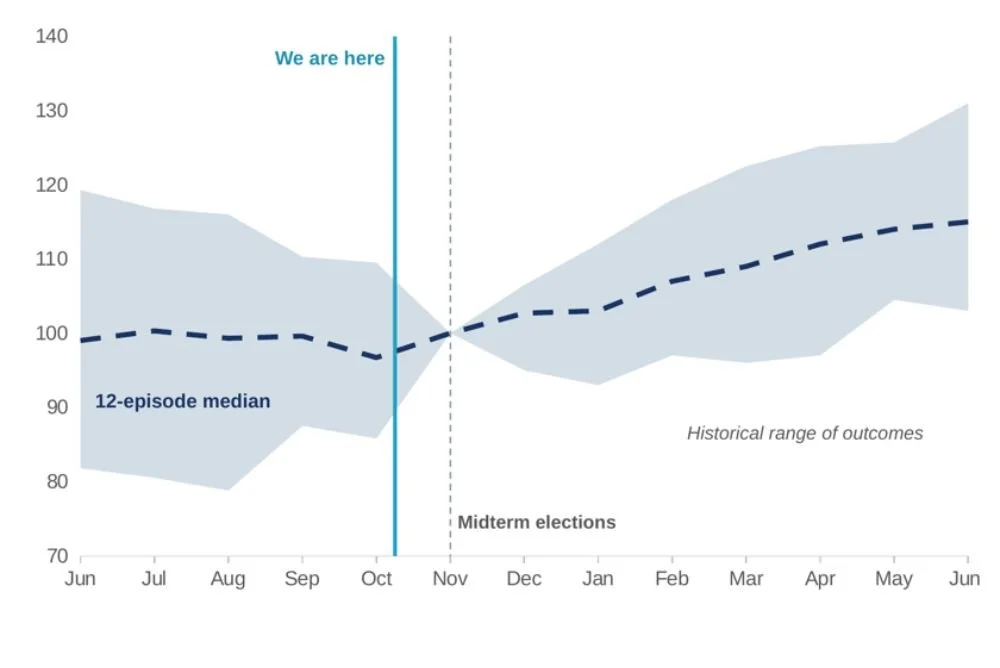
Figure 2: S&P 500 during midterm election years since 1974, indexed to 100 at the November election
Source: Goldman Sachs Global Investment Research. Values approximate. Past performance is not indicative of future results.
As we look toward the final quarter of 2026, one of the more immediate factors to watch is the upcoming midterm election, and the potential for increased market volatility surrounding it.
Election cycles tend to create uncertainty for investors, and that uncertainty is often reflected in markets in the months leading up to Election Day. It’s common to see volatility increase as investors consider the potential outcomes and what those outcomes could mean for taxes, regulation, government spending, and the broader economy.
History, however, offers some helpful perspective.
While elections can have a meaningful short-term impact on investor sentiment and market volatility, the outcome itself has historically been much less important to long-term market performance than many investors might expect. Once the election is over and some of the uncertainty has been resolved, markets tend to refocus on the fundamentals like economic growth, corporate earnings, interest rates, and other factors that have a more lasting influence on investment returns.
Interestingly, periods of political gridlock have historically been associated with some of the stronger market environments. While that may seem counterintuitive, markets generally value certainty. When investors have a clearer sense of what policymakers are, and are not, likely to accomplish, they can place greater emphasis on the underlying economic and corporate fundamentals rather than trying to anticipate the next policy change.
That doesn’t mean the midterms should be ignored. We should expect some additional volatility as Election Day approaches, particularly as the range of potential outcomes becomes clearer. But it’s important to distinguish between short-term uncertainty and long-term investment risk.
Regardless of the election outcome, history suggests that markets ultimately return their attention to the fundamentals. For long-term investors, that makes maintaining perspective, and avoiding the temptation to make significant portfolio changes based solely on election headlines, particularly important as we move through the remainder of 2026.
Are you prepared for taxes in retirement?
For more long-term tax planning strategies, claim your FREE copy of Brandon’s eBook, Retire by Design!
Interest Rates in Focus
The other major theme we’re watching as we move through the final quarter of 2026 is interest rates. The Federal Reserve’s policy decisions are once again coming into focus, particularly as the possibility of additional rate increases continues to shape expectations across both the stock and bond markets.
For bond investors, the relationship between interest rates and bond prices is particularly important. The two generally move in opposite directions.
Consider a simple example: if you purchase a $1,000 bond that pays 3% interest and market rates subsequently rise to 4%, a newly issued $1,000 bond would offer a more attractive return. As a result, the market value of your original 3% bond would generally decline. This inverse relationship between rates and bond prices is one of the most important dynamics to understand when investing in fixed income.
This isn’t a new development. Interest rates have been rising for several years, driven by a combination of Federal Reserve policy and broader economic forces, including inflation. What has changed more recently is the degree of pressure appearing in bond markets around the world. Rates have moved meaningfully higher in several international markets, and some countries, including France, have begun to show signs of increased stress in their bond markets.
While those developments have not translated into the same level of concern in U.S. markets, they are an important consideration when managing fixed-income portfolios. In this environment, we believe it’s particularly important to be intentional about where we take risk and where we don’t.

Figure 3: S&P 500 average forward total returns following Fed rate hikes and cuts, October 1982–September 2026
Source: Creative Planning; data via YCharts/Federal Reserve, Oct. 1982–Sep. 2026. Figures are averages; individual periods varied. Past performance is not indicative of future results.
What Do Higher Rates Mean for Stocks?
It’s also worth putting the relationship between Federal Reserve policy and stock market performance into perspective.
It may seem intuitive that higher rates should automatically be bad for stocks, while lower rates should be good. Historically, however, the relationship is more nuanced. Stock markets have generally performed reasonably well following both rate increases and rate cuts.
One reason is that the Federal Reserve typically raises rates when the economy is relatively strong. Higher rates are often a response to economic growth and persistent inflation rather than a cause of economic weakness. Similarly, when the Fed begins cutting rates, it may be responding to signs that the economy is slowing or that challenges have already emerged.
In other words, the direction of interest rates is only one piece of the larger market picture. The economic conditions that lead the Fed to change rates can be just as important, or more important, than the rate change itself.
As we look ahead, we continue to feel confident in the underlying direction of markets. At the same time, the current interest-rate environment reinforces the importance of maintaining a thoughtful approach to portfolio construction, particularly within fixed income, and staying focused on the factors that matter most for long-term investors.
Positioning for the Road Ahead
There are certainly reasons to expect some short-term volatility as we move through the remainder of 2026. Between the upcoming midterm elections, the direction of interest rates, and other potential sources of uncertainty, investors have plenty to watch.
At the same time, we don’t believe the current environment looks broadly overvalued or stretched to the same degree we saw in late 2024. That leaves us with room for continued growth, even if the path isn’t perfectly smooth. While periods of volatility are possible, we remain constructive on the markets as we close out 2026 and look ahead to early 2027.
That doesn’t mean ignoring the risks on the horizon. Instead, we’re focused on building portfolios that can participate in continued market growth while also providing some protection if conditions change.
Managing Risk Without Losing Opportunity
One important component of that approach has been maintaining exposure to cash and commodities.
Commodities have been among the strongest-performing areas of the market this year, providing a meaningful boost to portfolio performance. But their role in a diversified portfolio goes beyond simply generating returns. We view commodities primarily as a potential hedge against periods of market volatility. If equity markets experience a significant shift, having assets that may behave differently from stocks can provide an important buffer.
We’re taking a similarly deliberate approach to the bond portion of portfolios.
As discussed earlier, rising interest rates can create challenges for bond investors, particularly when holding longer-term bonds. The longer a bond’s duration, the more sensitive its price tends to be to changes in interest rates. A shorter-duration bond generally experiences smaller price swings when rates move.
For that reason, we have maintained relatively short durations within our bond exposure. The goal isn’t to chase returns in the fixed-income portion of a portfolio. Bonds serve an important role as a source of stability and diversification, and we want to preserve that role.
As rates have moved higher, bonds are also becoming more attractive from an income perspective. That’s something we’re watching closely, as higher yields could eventually create opportunities to add duration when the potential return justifies the additional interest-rate risk. For now, however, we continue to prioritize safety and flexibility.
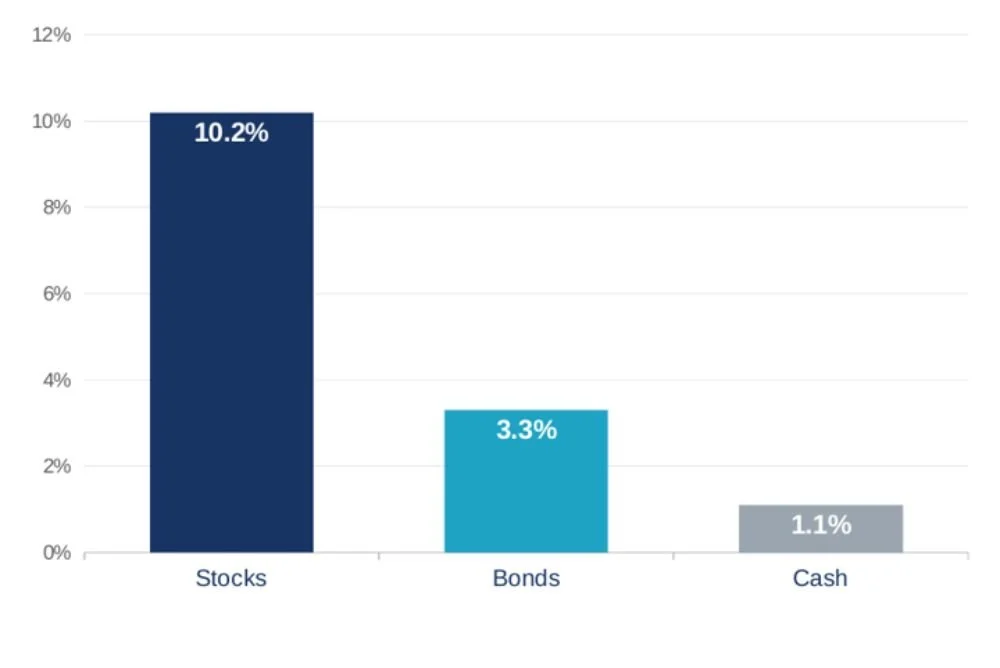
Figure 4: Average annual total returns after inflation, 1978–2025
Source: Bloomberg. Annual data as of December 31, 2025. Latest data available. Stocks = S&P 500 Index. Bonds = Bloomberg U.S. Aggregate Bond Index. Cash = ICE BofA U.S. 3-Month Treasury Bill Index. Annual total returns after average annual YoY U.S. Consumer Price Index referenced for inflation. Past performance is not indicative of future results.
Staying Invested Through Volatility
Perhaps most importantly, we believe investors should remain focused on staying invested through periods of uncertainty.
Market volatility can be uncomfortable, but it can also create opportunities. Having cash and other diversifying assets in place gives us greater flexibility to take advantage of those opportunities when they arise, rather than being forced to sell investments at an unfavorable time.
That’s ultimately the value of a balanced portfolio. We don’t need to predict exactly when the next market downturn will occur or exactly when the next period of strong growth will begin. Instead, we can build a portfolio designed to participate in the upside while maintaining appropriate safeguards against the risks we can identify.
Looking Ahead
As we head toward the end of 2026 and into 2027, we remain optimistic about the outlook for equities and the broader market. We also recognize that a strong market doesn’t eliminate risk, and we expect there will be periods of volatility along the way.
Our approach is to prepare for both possibilities.
By maintaining diversification, using cash and commodities as potential sources of stability, and keeping bond exposure focused on safety and flexibility, we can continue to take risk where we believe we’re being appropriately compensated for it, particularly within equities, while maintaining a level of protection against unexpected changes in the market.
In an environment where the long-term outlook remains positive but short-term uncertainty is likely to persist, we believe that balance is more important than ever.